Algae Attack Team: The Best Tank Cleaning Crew 2026
Meet the Algae Attack Team, Guide My Tank’s top tank-cleaning crew for 2026. Learn how these hardworking algae eaters help control buildup, clean surfaces, and support a healthier, better-looking aquarium.
By GuideMyTank Editorial Team · Published · Updated
Introduction: Meet the Algae Attack Team
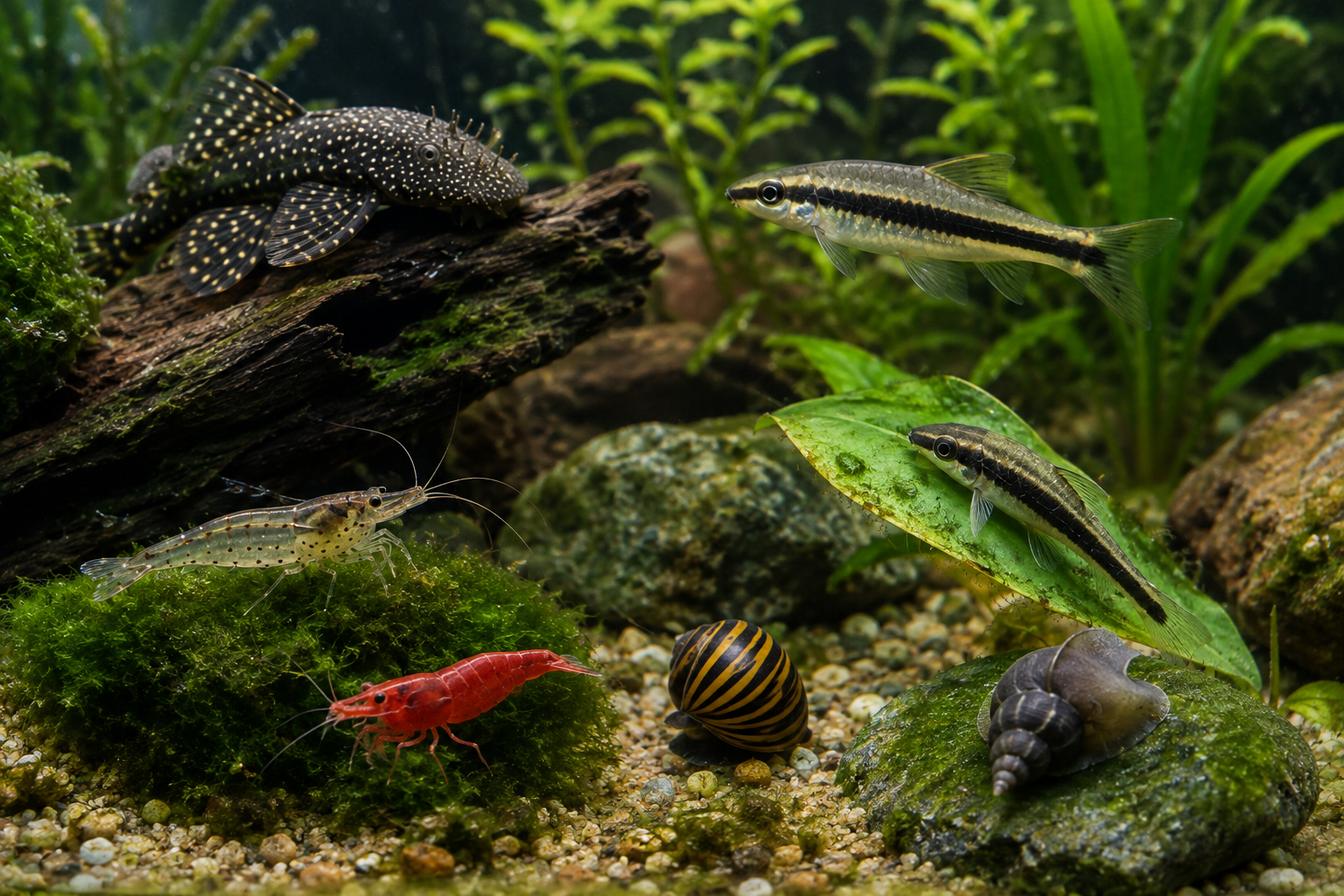
Algae is a natural part of a freshwater aquarium, but when it starts taking over the glass, plants, rocks, and decor, a good cleanup crew can help keep it under control. A cleanup crew is a group of aquarium inhabitants chosen partly for their ability to graze on algae, consume leftover food, and forage through areas of the tank that fishkeepers may have difficulty reaching. Depending on the aquarium, that crew might include shrimp, snails, catfish, or specialized algae eating fish. Each has its own strengths, and no single species tackles every type of algae. The best cleanup crew is not simply the one that eats the most algae. It is one that fits your tank size, water parameters, existing livestock, and the specific algae problems in your aquarium. Most importantly, a cleanup crew helps maintain an aquarium. It does not clean the aquarium for you. Regular water changes, substrate cleaning, algae removal, filter maintenance, and proper feeding are still necessary. Think of your cleanup crew as reinforcements in the fight against algae, not a replacement for good aquarium care.
The Best Algae Eaters for Your Cleanup Crew
Every member of the Algae Attack Team brings something different to the fight. No single species eats every type of algae, so the best choice depends on the algae you are dealing with, your tank size, and your existing livestock.
- Amano Shrimp — The Detail Specialist: Small but relentless, Amano Shrimp are excellent grazers of hair and filamentous algae, soft algae, and biofilm. Their size allows them to work around plants, rocks, driftwood, and tight spaces that larger algae eaters cannot easily reach.
- Bristlenose Pleco — The Heavy Hitter: Bristlenose Plecos are excellent for grazing larger surfaces such as aquarium glass, rocks, and driftwood. They require more space, produce considerably more waste, and still need a proper diet beyond the algae in your tank.
- Nerite Snail — The Glass Cleaner: Nerite Snails steadily graze algae from glass and hardscape and are particularly useful against green spot algae. They cannot successfully reproduce in freshwater, making unwanted population explosions less of a concern.
- Siamese Algae Eater — The Specialist: The true Siamese Algae Eater is especially valuable when dealing with filamentous algae and black beard algae. They are active fish and require significantly more swimming space than shrimp or snails.
- Otocinclus — The Plant Patrol: Otocinclus are small, peaceful catfish that graze soft algae and brown diatoms, including growth on plant leaves. They are social fish and do best in groups in mature aquariums with established natural grazing opportunities.
- Cherry Shrimp — The Support Crew: Cherry Shrimp constantly pick through biofilm, soft algae, and organic material. They are not as powerful against troublesome algae as Amano Shrimp, but their small size makes them useful members of planted and nano aquarium cleanup crews.
The takeaway: Don’t choose an algae eater simply because it has a reputation for cleaning tanks. Match the animal to the job and make sure your aquarium can properly support it.
Build the Right Crew for Your Tank
The best cleanup crew is not the one with the most algae eaters. It is the one that fits your aquarium. Tank size, plants, water parameters, existing livestock, and the type of algae present should all determine which species you add.
A small planted aquarium may benefit from shrimp and snails, while a larger community tank has room for fish such as Bristlenose Plecos or Siamese Algae Eaters. Combining species that graze in different areas can also create a more effective cleanup crew.
Some example teams:
- Nano Tank: Amano Shrimp + Nerite Snail
- Planted Tank: Amano Shrimp + Otocinclus
- 20+ Gallon Community: Amano Shrimp + Bristlenose Pleco
- Larger Community Tank: Bristlenose Pleco + Siamese Algae Eater
Build Your Crew: These are examples, not universal stocking recommendations. Always check tank size, group requirements, water parameters, and compatibility with your existing livestock before adding a species. Use the GuideMyTank Aquarium Builder and Compatibility Checker to plan a cleanup crew that works with your aquarium.
Know Your Enemy: Not All Algae Is the Same
Not all algae is the same, and no cleanup crew member eats every type. Identifying what is growing in your aquarium can help you choose the right algae eater and, more importantly, understand what may be causing the problem.
Green algae is commonly grazed by Nerite Snails, Bristlenose Plecos, and other algae eaters. Hair and filamentous algae are a strength of Amano Shrimp and Siamese Algae Eaters. Brown diatoms are commonly grazed by Otocinclus and Nerite Snails, while black beard algae is more difficult and is one area where true Siamese Algae Eaters can be particularly useful.
Cleanup crews can reduce algae, but persistent growth usually means there is something else to address. Excessive lighting, excess nutrients, overfeeding, and inconsistent maintenance can all contribute to algae problems.
Attack the Cause: If algae keeps returning faster than your cleanup crew can handle it, adding more animals probably is not the answer. Identify the type of algae and correct the conditions encouraging its growth. Remember you are apart of the team too.
Frequently Asked Questions
What is the best overall algae eater?
There is no single best algae eater for every aquarium. Amano Shrimp are excellent all around grazers, while Bristlenose Plecos, Nerite Snails, Otocinclus, and Siamese Algae Eaters each excel in different situations.
Can I keep multiple types of algae eaters together?
Yes. Many cleanup crew species can live together when their tank size, water parameters, social needs, and temperaments are compatible. Always check compatibility before combining species.
Will a cleanup crew keep my aquarium clean?
No. A cleanup crew helps control algae and consume organic material, but it does not replace water changes, substrate cleaning, filter maintenance, or manual algae removal.
How many cleanup crew animals should I add?
There is no universal number. Stock according to your tank size, existing bioload, available food, and each species' social requirements. Adding too many algae eaters can result in overcrowding or insufficient food.
Sources and references
- Nature’s Amazing Algae Eater — Aquarium Co-Op, Aquarium Co-Op
- Bristlenose Catfishes (Ancistrus) in the Aquarium: Keeping, Care, and Breeding, Ancistrus.at
Related resources
Continue with the most relevant GuideMyTank care, species, and planning resources.
- Amano Shrimp Care GuideAmano Shrimp are peaceful freshwater shrimp known for their excellent algae-eating ability and active scavenging behavior. Originally from Japan and other parts of East Asia, they are a popular choice for planted and community aquariums because they help clean algae, leftover food, and other organic material from the tank. Amano Shrimp are hardy once established, but they do best in stable, well-maintained water with plenty of plants, hiding places, and surfaces to graze on. Their peaceful nature makes them suitable for many community tanks, provided they are not housed with large or aggressive fish that may see them as food.
- Amano Shrimp Species ProfileCaridina multidentata
- Bristlenose Pleco Care GuideThe Bristlenose Pleco (Ancistrus spp.), also known as the Bushynose Pleco or Bristlenose Catfish, is a peaceful freshwater catfish recognized by the distinctive bristles that develop around its snout. Smaller than many other plecos, they are popular community fish that spend much of their time grazing on surfaces and sheltering among driftwood, rocks, and caves. Bristlenose Plecos come in numerous species and aquarium-bred varieties, including Albino, Super Red, Calico, Longfin, and Black-Eyed Yellow forms. More specialized varieties include fish identified by L-numbers, such as the sought-after L183 Starlight Bristlenose (Ancistrus dolichopterus), along with L181, L182, and L184 Ancistrus. L-numbers are identification codes used in the aquarium hobby for loricariid catfish, particularly when a fish entered the trade before receiving a confirmed scientific name. An L-number therefore identifies a particular form or species and isn't simply a color or pattern designation.
- Bristlenose Pleco Species ProfileAncistrus cirrhosus