Bristlenose Pleco Care Guide
Bristlenose Pleco Care Guide
Download Care Guide PDFAncistrus cirrhosus
The Bristlenose Pleco (Ancistrus spp.), also known as the Bushynose Pleco or Bristlenose Catfish, is a peaceful freshwater catfish recognized by the distinctive bristles that develop around its snout. Smaller than many other plecos, they are popular community fish that spend much of their time grazing on surfaces and sheltering among driftwood, rocks, and caves. Bristlenose Plecos come in numerous species and aquarium-bred varieties, including Albino, Super Red, Calico, Longfin, and Black-Eyed Yellow forms. More specialized varieties include fish identified by L-numbers, such as the sought-after L183 Starlight Bristlenose (Ancistrus dolichopterus), along with L181, L182, and L184 Ancistrus. L-numbers are identification codes used in the aquarium hobby for loricariid catfish, particularly when a fish entered the trade before receiving a confirmed scientific name. An L-number therefore identifies a particular form or species and isn't simply a color or pattern designation.
By GuideMyTank Editorial Team · Published · Updated
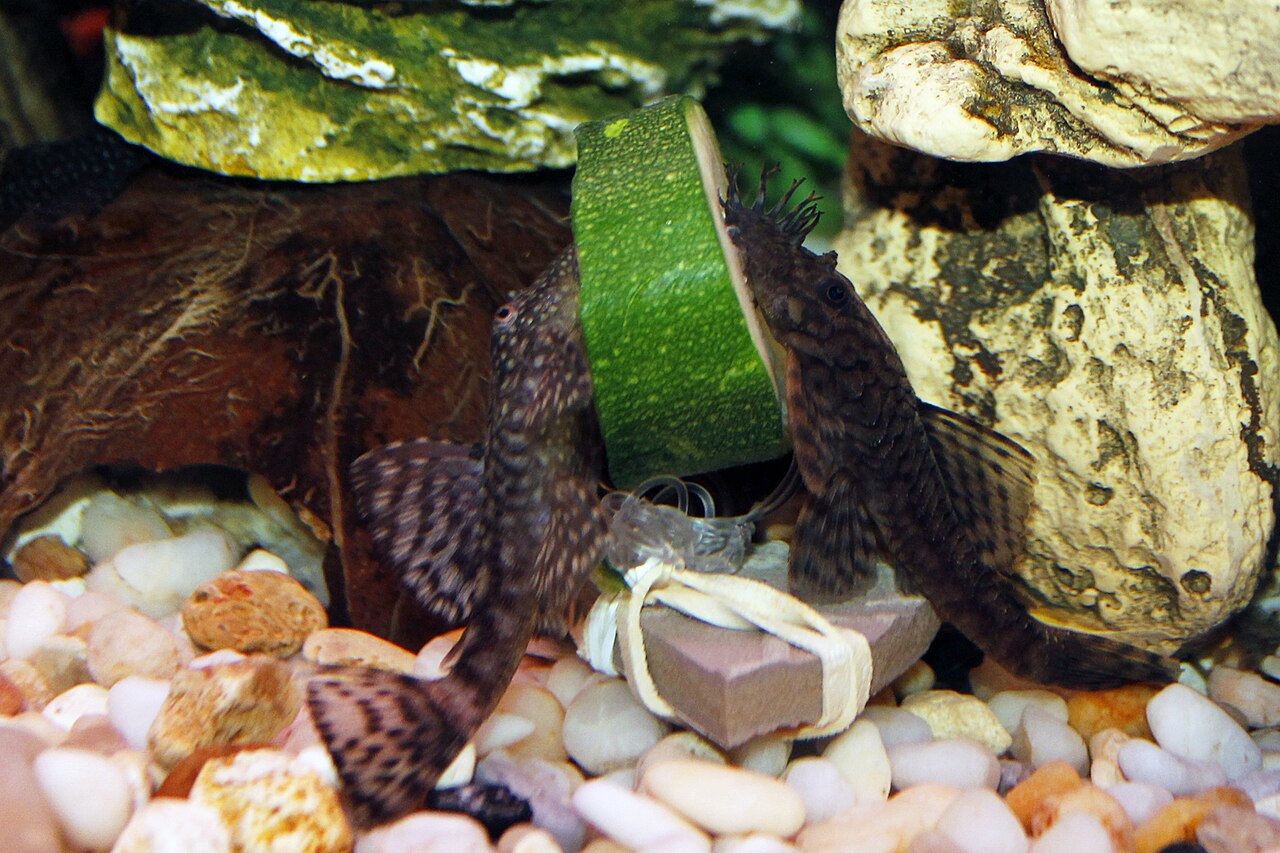
Image: By Anthony C - Own work, CC BY-SA 3.0, https://commons.wikimedia.org/w/index.php?curid=19039294
Understanding the species
Overview
The Bristlenose Pleco (Ancistrus cirrhosus) is one of the most popular small plecos in the aquarium hobby, combining an unusual appearance with a peaceful temperament and fascinating behavior. Unlike the Common Pleco, which can eventually grow well over a foot long, Bristlenose Plecos generally remain around 4 to 6 inches, making them a much more practical choice for home aquariums. Their most recognizable feature is the collection of fleshy bristles, or tentacles, around the snout. These are especially prominent on mature males, while females typically have fewer and smaller bristles. Bristlenose Plecos spend much of their time attached to driftwood, rocks, glass, and other surfaces using their sucker shaped mouths while searching for algae and food. Although often purchased as an algae eater, the Bristlenose Pleco is much more than a cleanup fish. They have individual personalities, establish favorite caves and resting places, and may learn to emerge when their keeper approaches the aquarium or when food is added. They are most active during the evening and at night but often become increasingly visible during the day once comfortable in their surroundings. Their manageable size, distinctive appearance, hardy nature, and variety of captive bred forms including Albino, Super Red, Calico, Longfin, and Black Eyed Yellow have made the Bristlenose a favorite for both community aquariums and dedicated pleco keepers.
Natural habitat
Bristlenose Plecos (Ancistrus cirrhosus) originate from freshwater rivers and streams in South America, where they inhabit areas with flowing, well oxygenated water. Their environment contains submerged wood, rocks, roots, and leaf litter that create sheltered areas for resting and feeding. These natural surfaces support algae, biofilm, and other organic material that Bristlenose Plecos spend much of their time grazing on. They frequently shelter beneath wood, inside crevices, and among rocks when resting. Habitat Tip: Natural driftwood should be considered a requirement, not just optional decoration, for a Bristlenose Pleco aquarium. It provides important grazing surfaces, shelter, and helps recreate the wood rich environment these fish naturally interact with. Include at least one piece of aquarium safe natural driftwood along with caves and other hiding places.
Adult size and lifespan
Adult Bristlenose Plecos typically reach 4 to 6 inches (10 to 15 cm) in length, making them considerably smaller than many other plecos commonly sold in aquarium stores. Males and females reach similar sizes, although mature males are easily recognized by their more prominent facial bristles. With proper care, Bristlenose Plecos commonly live 5 to 10 years, and some individuals may live even longer in stable, well maintained aquariums. Care Tip: Buying a small pleco does not necessarily mean it will stay small. Confirm that you are purchasing a Bristlenose Pleco rather than a juvenile Common Pleco or another species that can grow much larger.
Aquarium setup and water conditions
Aquarium requirements
Bristlenose Plecos do best in a 20 gallon aquarium or larger with good filtration, stable water conditions, and plenty of bottom space to explore. Larger tanks are recommended when keeping multiple plecos because individuals may establish territories around preferred shelters. The aquarium should contain multiple caves, shaded areas, rocks, and other hiding spots where the pleco can retreat during the day. At least one appropriately sized cave should always be available for each Bristlenose Pleco. Natural driftwood is a requirement for a proper Bristlenose Pleco setup. It provides shelter, natural grazing surfaces, and an environment that encourages their normal feeding and resting behaviors.
Water parameters
Bristlenose Plecos are hardy and adaptable, but they do best in clean, stable, well oxygenated water. Avoid sudden changes in temperature or water chemistry. Temperature: 72 to 80°F (22 to 27°C) pH: 6.5 to 7.5 GH: 4 to 15 dGH KH: 2 to 10 dKH Ammonia: 0 ppm Nitrite: 0 ppm Nitrate: Below 20 ppm Water Tip: Bristlenose Plecos produce a surprising amount of waste for their size. Regular water changes and strong biological filtration are important for keeping nitrate levels under control and maintaining good water quality.
Filtration and flow
Bristlenose Plecos prefer clean, well oxygenated water with moderate water movement. A properly sized hang on back or canister filter works well, while sponge filtration can provide additional biological filtration and oxygenation. Because Bristlenose Plecos produce a significant amount of waste, adequate filtration is especially important. Choose a filter capable of handling the aquarium’s full bioload rather than relying on the pleco as part of the cleanup crew.
Heating requirements
Bristlenose Plecos prefer temperatures between 72 and 80°F (22 to 27°C). In most aquariums, an adjustable heater is recommended to maintain a stable temperature and prevent sudden fluctuations. A temperature around 74 to 78°F (23 to 26°C) works well for most Bristlenose Plecos and is compatible with many tropical community fish.
Lighting
Bristlenose Plecos do not require specialized lighting and generally prefer low to moderate light levels. As naturally shy fish that are most active during the evening and at night, they appreciate shaded areas where they can retreat during brighter parts of the day. A normal 8 to 10 hour light cycle works well, especially in planted aquariums.
Substrate
Bristlenose Plecos can be kept on sand, smooth gravel, or planted aquarium substrates. Because they spend much of their time along the bottom, avoid sharp or rough materials that could injure their underside or delicate barbels. Sand or smooth, rounded gravel works particularly well and allows the pleco to comfortably forage around driftwood and other decor. Substrate Tip: Keep areas around caves and driftwood free of sharp stones or rough decorations. Bristlenose Plecos frequently squeeze into tight spaces and rest directly against the substrate.
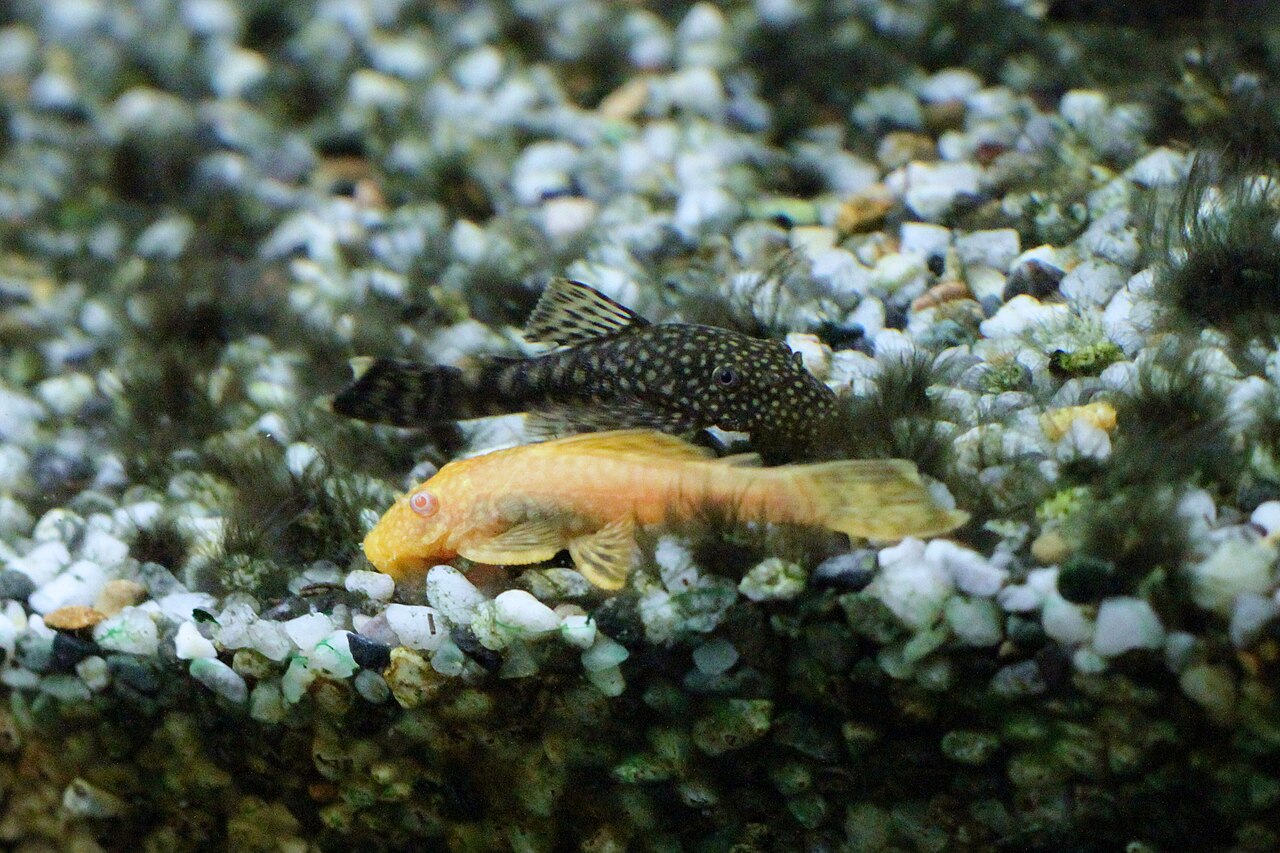
Image: By Ken Lord - originally posted to Flickr as Albino Bristlenose Plecostomus, CC BY 2.0, https://commons.wikimedia.org/w/index.php?curid=10475642
Behavior and community planning
Behavior and temperament
Bristlenose Plecos are generally peaceful, calm, and somewhat shy fish that spend much of their time grazing on driftwood, rocks, glass, and other surfaces. They are often most active during the evening and at night, although established individuals may become comfortable enough to remain active during the day. They can also become surprisingly familiar with their keepers. Many Bristlenose Plecos learn feeding routines and may emerge from their favorite cave when food arrives or when their keeper approaches the aquarium. While peaceful toward most community fish, Bristlenose Plecos can be territorial with other bottom dwelling fish and other plecos, particularly around caves. Adult males can be especially protective of their preferred territory.
Social requirements
Bristlenose Plecos are not schooling or social fish and are perfectly comfortable being kept alone. A single Bristlenose can thrive without the companionship of another pleco. Multiple Bristlenose Plecos can be kept together when the aquarium provides enough bottom space, natural driftwood, and separate caves for each fish. Adult males may become territorial toward one another, particularly when competing for caves. Social Tip: You do not need to buy a second Bristlenose to keep the first one company. If keeping multiple plecos, provide at least one cave per fish plus additional hiding options so they can establish separate territories.
Tank mates
Bristlenose Plecos are peaceful and work well with a wide variety of community fish that share similar water requirements. Since they spend most of their time near the bottom, they pair especially well with species that occupy the middle and upper areas of the aquarium. Good tank mates include Tetras, Rasboras, Danios, Corydoras, Guppies, Platies, peaceful Gouramis, and many peaceful dwarf Cichlids. Shrimp and snails can also coexist with Bristlenose Plecos in suitable setups. Be more careful when adding other plecos or territorial bottom dwellers because competition for caves, food, and territory can occur. Tank Mate Tip: Give bottom dwelling species their own hiding areas and feeding spots. For specific combinations, use the GuideMyTank Compatibility Checker to compare species before adding them to your aquarium.
Species to avoid
Avoid keeping Bristlenose Plecos with large, highly aggressive, or predatory fish that may injure or continually harass them. Extra care should also be taken with territorial bottom dwellers that compete for the same caves and resting areas. Species to avoid or carefully evaluate include large aggressive Cichlids, Oscars, Jack Dempseys, aggressive large Catfish, and highly territorial Plecos. Some species may work in larger, carefully planned setups, but should not be considered automatically compatible. Compatibility Tip: Bottom territory matters just as much as temperament. Use the GuideMyTank Compatibility Checker to check a specific species before introducing it to your Bristlenose Pleco.
Feeding, health, and routine care
Diet and feeding
Bristlenose Plecos are omnivores with a strong preference for plant based foods. While they are excellent algae grazers, the algae growing naturally in an aquarium is not enough to provide a complete diet. Feed a quality algae wafer or sinking pleco pellet as a staple food. These are widely available at aquarium and pet stores. Supplement with vegetables such as zucchini, cucumber, green beans, spinach, and squash. Occasional protein rich foods can also be offered, but should not dominate their diet. Natural driftwood should always be available for grazing, but it should not be treated as a replacement for proper feeding.
Common health concerns
Bristlenose Plecos are generally hardy, but poor water quality, inadequate nutrition, stress, and injuries can lead to health problems. Common concerns include ich, bacterial or fungal infections, parasites, damaged fins, and digestive problems such as bloating. A sunken belly or noticeable weight loss can indicate inadequate feeding, internal parasites, or illness. Because plecos are often sold as cleanup fish, underfeeding is an important concern. They still require a complete diet even when algae is available.
Breeding and long-term guidance
Breeding
Bristlenose Plecos are cave spawners and are among the easier plecos to breed in home aquariums. Once a pair is mature, the female lays her eggs inside a secure cave, where the male fertilizes them and takes responsibility for guarding the nest. The male remains inside the cave, fanning and protecting the eggs until they hatch. After hatching, the fry initially survive on their yolk sacs before beginning to explore and feed on their own. Young Bristlenose Plecos can be offered algae wafers, specialized fry foods, and soft vegetables such as zucchini once they begin feeding independently. Breeding Tip: If a male suddenly spends nearly all of his time inside a cave and rarely comes out, check carefully before disturbing him. He may be guarding a clutch of eggs or newly hatched fry.
Beginner guidance
Bristlenose Plecos are an excellent choice for beginners because they are hardy, peaceful, manageable in size, and adaptable to many community aquariums. However, they should not be purchased simply as a fish that will clean the tank. They still require proper feeding, good filtration, hiding places, and regular aquarium maintenance. A suitable setup should include natural driftwood, at least one secure cave, and a varied diet that includes algae wafers or sinking pleco foods along with vegetables.
Species-specific guidance
Driftwood and cave requirements
Bristlenose Plecos do well in planted aquariums and generally leave healthy plants alone when properly fed. Hardy plants such as Anubias, Java fern, Amazon swords, and Cryptocoryne work well, especially when attached to or planted around hardscape. Natural driftwood is required and should form a major part of the aquarium. Provide plenty of wood, rocks, shaded areas, and secure caves where the pleco can retreat and establish a territory. Each Bristlenose should have access to its own suitable hiding place. Make sure decorations are stable, since Bristlenose Plecos are surprisingly strong and can dig beneath or push against unsecured hardscape.
Frequently asked questions
Does a Bristlenose Pleco need driftwood?
Yes. Natural driftwood should be considered an essential part of a Bristlenose Pleco aquarium. It provides shelter, grazing surfaces, and supports their natural behavior.
Do Bristlenose Plecos eat all the algae in a tank?
No. They are excellent algae grazers, but they will not eliminate every type of algae and still require regular feeding with algae wafers, sinking foods, and vegetables.
Can I keep more than one Bristlenose Pleco?
Yes, provided the aquarium is large enough and has sufficient bottom territory. Give each pleco its own cave and hiding areas, particularly when keeping multiple males.
How big do Bristlenose Plecos get?
Most Common Bristlenose Plecos reach around 4 to 6 inches, making them significantly smaller and more manageable than Common Plecos.
Sources and references
- Bristlenose Catfishes (Ancistrus) in the Aquarium: Keeping, Care, and Breeding, Ancistrus.at
- Bristlenose Pleco 101: Care, Lifespan, Size, & Breeding — Millie Sheppard, Aquarium Source
Related resources
Continue researching Bristlenose Pleco care and aquarium planning.
- A Practical Quarantine Routine for New Freshwater FishHow to prepare and operate a simple quarantine aquarium, observe new fish, prevent cross-contamination, and decide when an animal is ready for the display tank.
- Algae Attack Team: The Best Tank Cleaning Crew 2026Meet the Algae Attack Team, Guide My Tank’s top tank-cleaning crew for 2026. Learn how these hardworking algae eaters help control buildup, clean surfaces, and support a healthier, better-looking aquarium.
- Amano Shrimp vs Bristlenose Pleco: An Algae Eater King?Compare Amano Shrimp and Bristlenose Plecos to see if they can live together and which is the better algae eater for your aquarium. Explore their algae eating ability, tank size, care requirements, water parameters, diet, temperament, and compatibility.
- Bristlenose Pleco Species ProfileAncistrus cirrhosus