Amano Shrimp Care Guide
Amano Shrimp Care Guide
Download Care Guide PDFCaridina multidentata
Amano Shrimp are peaceful freshwater shrimp known for their excellent algae-eating ability and active scavenging behavior. Originally from Japan and other parts of East Asia, they are a popular choice for planted and community aquariums because they help clean algae, leftover food, and other organic material from the tank. Amano Shrimp are hardy once established, but they do best in stable, well-maintained water with plenty of plants, hiding places, and surfaces to graze on. Their peaceful nature makes them suitable for many community tanks, provided they are not housed with large or aggressive fish that may see them as food.
By GuideMyTank Editorial Team · Published · Updated
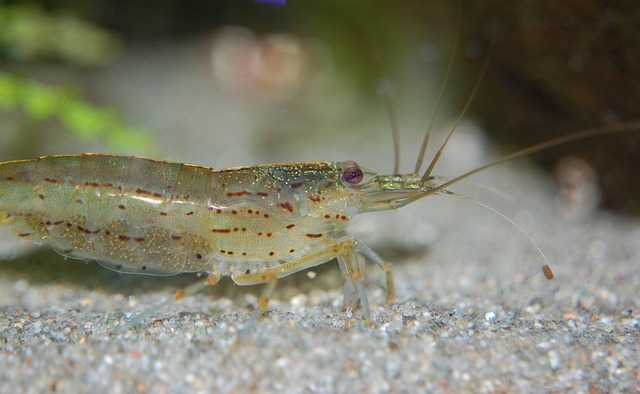
Image: basuka, Content License <https://pixabay.com/service/license-summary/>, via pixabay
Understanding the species
Overview
Amano shrimp (Caridina multidentata) are peaceful, translucent freshwater crustaceans that grow up to two inches long and are famous for their unmatched ability to consume stubborn aquarium algae like hair and thread algae. Popularized by legendary aquascaper Takashi Amano, these hardy scavengers thrive in stable, well-oxygenated freshwater tanks of at least five gallons, preferring temperatures between 65–82°F and a pH of 6.0 to 8.0. While they are opportunistic omnivores that happily eat leftover fish food, biofilm, and detritus, keepers must ensure their habitat has a tight-fitting lid to prevent escape, and absolutely zero copper, which is highly toxic to them. Breeding Amano shrimp in captivity is notoriously difficult because, while females frequently carry eggs in freshwater, the hatched larvae require a complex transition into brackish or saltwater to survive, meaning they will never accidentally overpopulate a standard home aquarium.
Natural habitat
Amano shrimp (Caridina multidentata) are native to clear, fast-flowing streams and rivers in Japan, Taiwan, and parts of coastal China. These waterways typically have rocky bottoms made up of gravel, stones, and larger boulders. The steady current keeps the water clean and well oxygenated while creating plenty of surfaces for algae and biofilm to grow. Adult Amano shrimp spend most of their lives in these freshwater environments, constantly grazing on algae, biofilm, and other organic material. Their reproductive cycle is unusual because it connects freshwater rivers with coastal waters. Adult Amano shrimp live and reproduce in freshwater, but after the females release their larvae, the current carries them downstream toward brackish or marine environments. The larvae develop in these saltier waters before eventually becoming juveniles and migrating back upstream into freshwater. Habitat Tip: You can recreate some of these natural conditions by providing moderate water movement with your filter and placing the filter outlet or a small circulation pump so it creates a gentle current across the tank. Avoid blasting the shrimp directly with strong flow. The goal is steady circulation and good oxygenation while still providing calmer areas where they can rest and graze.
Adult size and lifespan
Adult Amano shrimp typically grow to around 2 to 2.5 inches (5 to 6.3 cm), making them noticeably larger than many other freshwater dwarf shrimp. Females are usually larger and fuller-bodied than males and may approach 3 inches when fully grown. Juveniles sold in aquarium stores are often around an inch long and gradually reach their adult size as they mature. Amano shrimp generally live for 2 to 3 years in home aquariums, although well-cared-for individuals can live 5 years or longer. Stable water parameters, good water quality, a varied diet, and appropriate tank mates all contribute to a longer lifespan. Care Tip: Avoid keeping Amano shrimp at unnecessarily high temperatures. Warmer water increases their metabolism, which can encourage faster growth but may also contribute to a shorter lifespan. Stability is more important than trying to maintain the warmest temperature within their acceptable range.
Aquarium setup and water conditions
Aquarium requirements
Amano shrimp are adaptable, but they do best in a mature, stable aquarium with plenty of surfaces for grazing. A 10-gallon tank or larger is recommended because the additional water volume makes it easier to maintain consistent water parameters. Smaller aquariums can work, but changes in temperature and water chemistry occur much more quickly. A planted setup is ideal. Live plants, driftwood, rocks, and other natural surfaces provide hiding places while encouraging the growth of algae and biofilm, which Amano shrimp spend much of their time grazing on. Hiding places are particularly important after molting, when their new exoskeleton is still soft and they are more vulnerable. Filtration should provide good oxygenation and moderate water movement without creating an excessively strong current throughout the entire aquarium. Sponge filters are particularly shrimp-friendly, while hang-on-back and canister filters should have a sponge or fine pre-filter covering the intake to prevent shrimp from being pulled into the filter. A secure lid is also recommended. Amano shrimp are surprisingly capable climbers and may leave the aquarium, particularly if water conditions are poor or they can reach openings around filters, tubing, or cables. Setup Tip: Don’t make the aquarium too clean. Allow some algae and biofilm to develop on rocks, driftwood, and other surfaces. These provide Amano shrimp with natural grazing areas and encourage the constant foraging behavior they would display in the wild.
Water parameters
Amano shrimp are fairly adaptable but need clean, stable water. Avoid sudden changes in temperature or water chemistry, especially during water changes. Temperature: 65–78°F (18–26°C) pH: 6.5–7.5 GH: 5–15 dGH KH: 1–10 dKH Ammonia: 0 ppm Nitrite: 0 ppm Nitrate: Below 20 ppm Water Tip: Stability matters more than chasing exact numbers. Make gradual adjustments and avoid large, sudden changes in temperature, pH, or hardness.
Filtration and flow
Amano shrimp prefer clean, well-oxygenated water with gentle to moderate flow. Sponge filters are an excellent choice, while hang-on-back and canister filters should have a pre-filter sponge covering the intake. Some water movement is beneficial and helps recreate the flowing streams Amano shrimp naturally inhabit, but the tank should also provide calmer areas for resting and grazing.
Heating requirements
Amano shrimp are comfortable between 65–78°F (18–26°C) and often do not require a heater if the room keeps the aquarium within this range. If temperatures regularly fall below this range or fluctuate significantly, use an adjustable aquarium heater to maintain stable conditions.
Lighting
Amano shrimp do not require specialized lighting. Low to moderate aquarium lighting works well and supports the growth of plants, algae, and biofilm that they naturally graze on.
Substrate
Amano shrimp can be kept on sand, fine gravel, or planted aquarium substrates. They do not require a specific substrate, but natural surfaces encourage grazing and complement planted setups.
Plants and decor
Amano shrimp thrive in planted aquariums with plenty of live plants, driftwood, and rocks. These provide hiding places, especially during molting, while also creating surfaces for algae and biofilm to grow. Plants such as Java moss, Java fern, Anubias, and other dense or broad-leaved species work especially well.
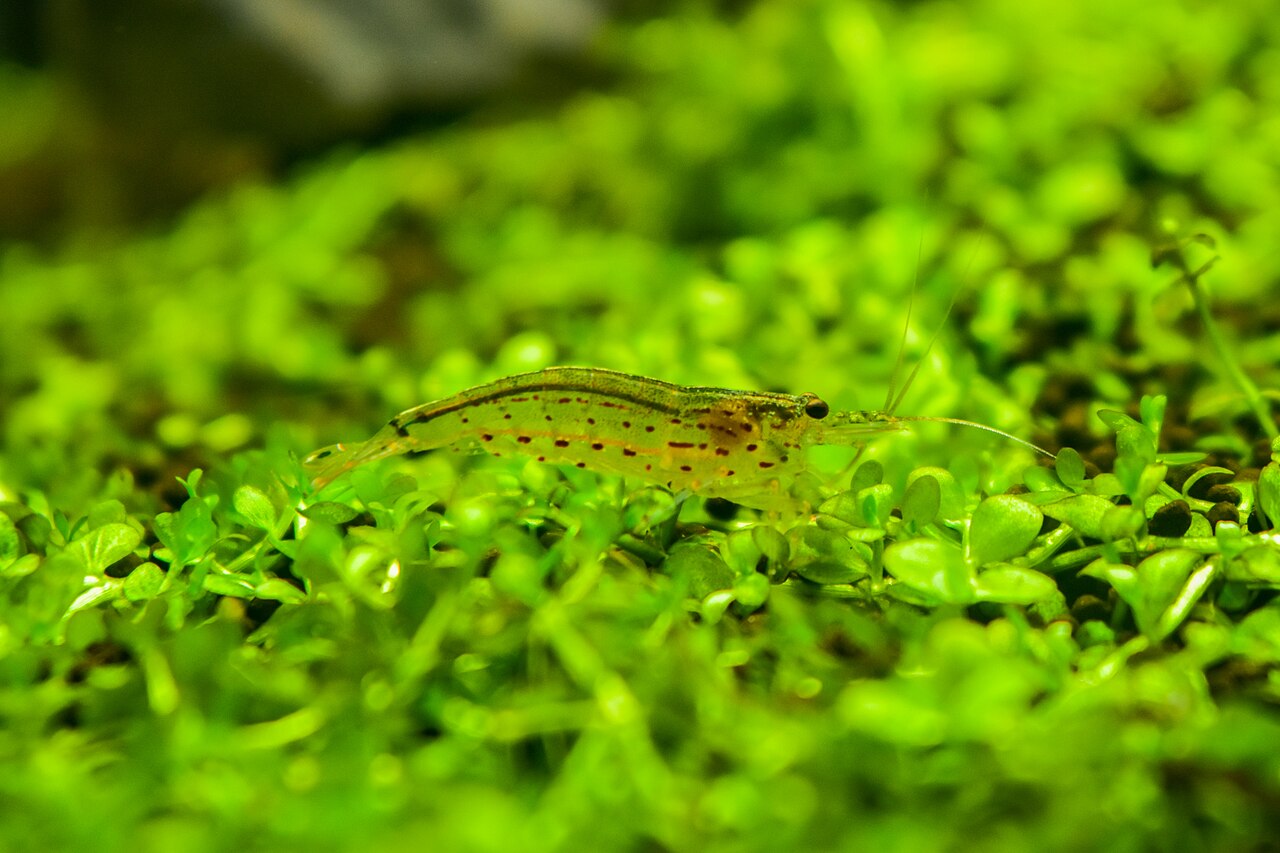
Image: By Atulbhats - Own work, CC BY-SA 4.0, https://commons.wikimedia.org/w/index.php?curid=73849312
Behavior and community planning
Behavior and temperament
Amano shrimp are peaceful, active, and social scavengers that spend much of the day exploring the aquarium for algae, biofilm, and leftover food. They generally ignore fish and other shrimp and are well suited to peaceful community tanks. They may occasionally compete with each other over food, especially when a high-value food such as a pellet or wafer is available, but this behavior is usually harmless.
Social and Group requirements
Amano shrimp are social but do not school. They can live alone, but keeping a group of 3–6 or more encourages more natural activity and makes them more visible in the aquarium. They generally coexist peacefully, although minor competition over food is normal.
Tank mates
Amano shrimp are peaceful and do best with small, non-aggressive community fish and other peaceful invertebrates. Good tank mates include small tetras, rasboras, Corydoras, Otocinclus, peaceful snails, and other dwarf shrimp. Avoid large, aggressive, or highly predatory fish that may view Amano shrimp as food. Even normally peaceful fish may prey on smaller or freshly molted shrimp.
Species to avoid
Avoid keeping Amano shrimp with large, aggressive, or predatory fish that can injure or eat them. Poor tank mates include: Large or aggressive cichlids Oscars Jack Dempseys Large gouramis Pufferfish Predatory catfish Large loaches Crayfish Even smaller fish may pick at freshly molted shrimp when they are vulnerable. Compatibility Tip: A simple rule is that if a fish can fit an Amano shrimp in its mouth, consider the shrimp at risk.
Feeding, health, and routine care
Diet and feeding
Amano shrimp are omnivorous scavengers that naturally graze on algae, biofilm, and decaying organic matter. In the aquarium, supplement this with shrimp pellets, algae wafers, and blanched vegetables such as zucchini or spinach. Feed small amounts 2–3 times per week in mature tanks with plenty of natural grazing material, adjusting based on how much food is available.
Common health concerns
Amano shrimp are generally hardy, but poor water quality, sudden parameter changes, and molting problems can cause stress or death. Copper-containing medications are also highly toxic to shrimp and should be avoided unless specifically labeled as invertebrate-safe. Signs of trouble include unusual inactivity, failed molts, loss of appetite, discoloration, or repeated attempts to escape the aquarium.
Breeding and long-term guidance
Beginner guidance
Amano shrimp are a great choice for beginners because they are hardy, peaceful, and excellent algae eaters. Their main requirement is a stable, fully cycled aquarium with clean water, plenty of grazing surfaces, and compatible tank mates. Avoid sudden water changes, overfeeding, and copper-based medications. Beginner Tip: Add Amano shrimp only after the aquarium is established and has developed some natural algae and biofilm for them to graze on.
Species-specific guidance
Brackish larval development
Breeding Amano shrimp is difficult in a home aquarium because their larvae require saltwater or brackish conditions to develop. Adults mate in freshwater, and females carry hundreds of eggs beneath their abdomen before releasing tiny free-swimming larvae. The larvae must then be moved to appropriately prepared saltwater for development. Once they metamorphose into juvenile shrimp, they can gradually be acclimated back to freshwater. Breeding Tip: Seeing a female carrying eggs does not mean you will get baby shrimp in a freshwater community tank. The larvae will not successfully develop without the required saltwater stage.
Frequently asked questions
Do Amano shrimp eat algae?
Yes. Amano shrimp are excellent algae grazers and will also consume biofilm and leftover food, though they cannot replace regular aquarium maintenance.
How many Amano shrimp should I keep?
They can live alone, but a group of 3–6 or more is ideal for encouraging natural activity.
Can Amano shrimp live with fish?
Yes. They do well with small, peaceful community fish. Avoid large or predatory species that could eat them.
Do Amano shrimp need a heater?
Not always. If your aquarium naturally remains within their preferred 65–78°F (18–26°C) range, a heater may not be necessary.
Why is my Amano shrimp hiding?
Hiding is common after molting, when the shrimp's new exoskeleton is soft. New shrimp may also hide while adjusting to the aquarium.
Can Amano shrimp breed in freshwater?
Adults breed in freshwater, but their larvae require a saltwater or brackish development stage, so they will not successfully reproduce entirely in a typical freshwater aquarium.
How long do Amano shrimp live?
Most live around 2–3 years, although well-cared-for individuals can live considerably longer.
Sources and references
- Amano Shrimp Care & Breeding Guide — Michael, Aquarium Breeder
- Amano Shrimp — The Shrimp Farm, The Shrimp Farm
- Amano Shrimp Care — Aquarium Care Basics, Aquarium Care Basics
Related resources
Continue researching Amano Shrimp care and aquarium planning.
- Algae Attack Team: The Best Tank Cleaning Crew 2026Meet the Algae Attack Team, Guide My Tank’s top tank-cleaning crew for 2026. Learn how these hardworking algae eaters help control buildup, clean surfaces, and support a healthier, better-looking aquarium.
- Amano Shrimp Species ProfileCaridina multidentata
- Amano Shrimp vs Bristlenose Pleco: An Algae Eater King?Compare Amano Shrimp and Bristlenose Plecos to see if they can live together and which is the better algae eater for your aquarium. Explore their algae eating ability, tank size, care requirements, water parameters, diet, temperament, and compatibility.
- Cherry ShrimpNeocaridina davidi