Amano Shrimp vs Bristlenose Pleco: An Algae Eater King?
Compare Amano Shrimp and Bristlenose Plecos to see if they can live together and which is the better algae eater for your aquarium. Explore their algae eating ability, tank size, care requirements, water parameters, diet, temperament, and compatibility.
By GuideMyTank Editorial Team · Published · Updated
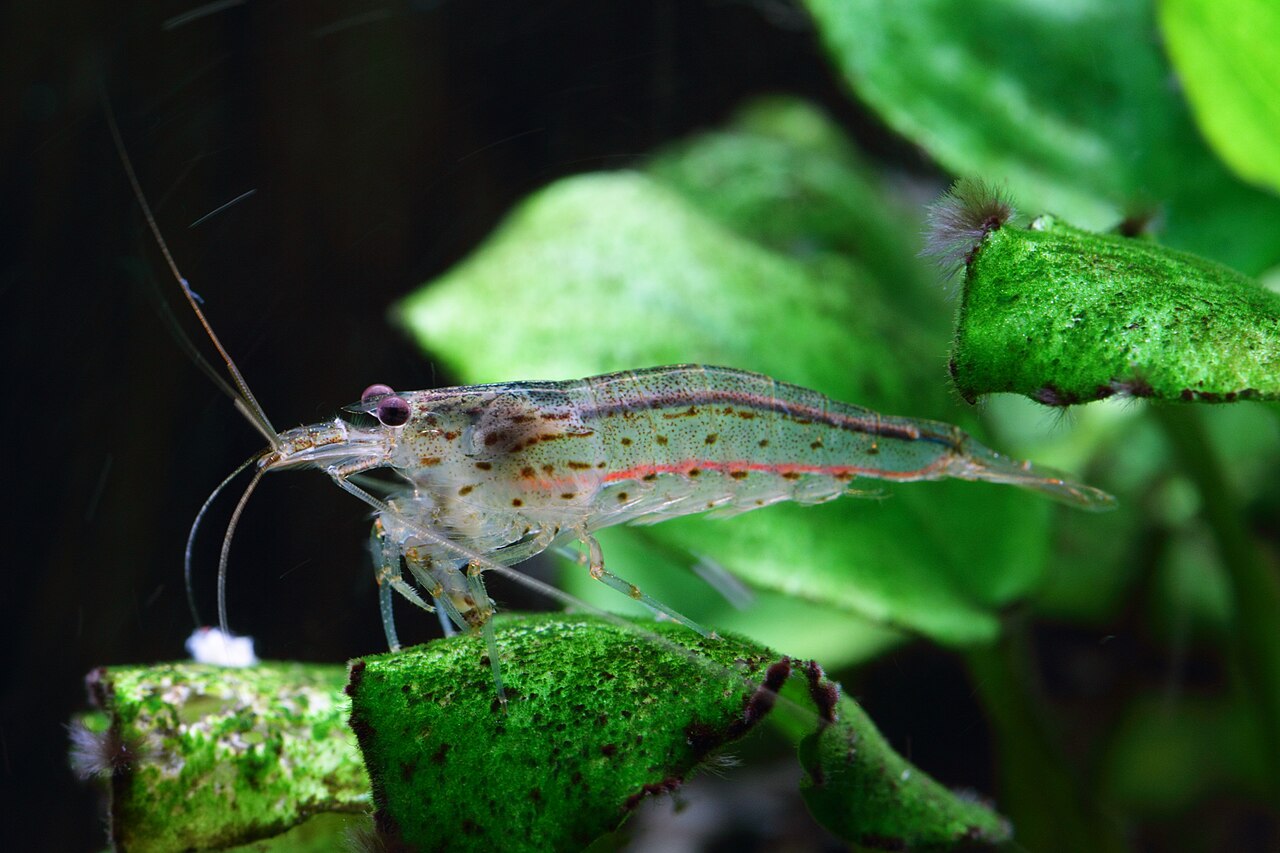
Image: By spacebirdy(also known as geimfyglið (:> )=| made with Sternenlaus-spirit) - Own work, CC BY-SA 3.0, https://commons.wikimedia.org/w/index.php?curid=23930527 · CC BY-SA 3.0
Amano Shrimp and Bristlenose Pleco have different aquarium requirements. This comparison uses GuideMyTank’s structured species and compatibility data; confirm any complete livestock plan in the Aquarium Builder.
Side-by-side comparison
| Requirement | Amano Shrimp | Bristlenose Pleco |
|---|---|---|
| Minimum tank size | 10 gallons | 20 gallons |
| Temperature | 64°F–82°F | 73°F–80°F |
| pH | 6.5–7.5 | 6.5–7.8 |
| Adult size | 1.5 inches | 5 inches |
| Temperament | Peaceful | Peaceful |
| Care level | Easy | Easy |
| Minimum group size | 3 | 1 |
Compatibility considerations
The compatibility engine classifies this pairing as compatible with 100% data confidence. Temperature ranges overlap well. pH requirements overlap well. Species have similar temperament. One species should be maintained in a proper school or group. No predation risk detected. Tank size requirements differ slightly.
A compatibility result is planning guidance, not a guarantee. Tank dimensions, group sizes, individual behavior, sex, décor, filtration, and the complete stocking plan can change the outcome.
Which fish fits your aquarium?
- Amano Shrimp has the lower listed minimum tank size at 10 gallons.
- Amano Shrimp is listed as Easy care, while Bristlenose Pleco is listed as Easy care.
- Amano Shrimp has a listed minimum group size of 3, compared with 1 for Bristlenose Pleco.
Frequently Asked Questions
Which needs the larger aquarium: Amano Shrimp or Bristlenose Pleco?
Bristlenose Pleco has the larger listed minimum tank size.
Can Amano Shrimp and Bristlenose Pleco live together?
GuideMyTank currently classifies the pairing as compatible. Review the full compatibility report and validate the complete aquarium rather than relying on a pair result alone.
Do Amano Shrimp and Bristlenose Pleco need the same water parameters?
Their listed temperature and pH ranges are shown in the comparison table. A shared aquarium requires overlap across the complete recommended ranges.
Which Is the Better Algae Eater?
Amano Shrimp and Bristlenose Plecos are both excellent algae grazers, but they are effective in different ways. Amano Shrimp are small enough to pick through plants, rocks, driftwood, and tight spaces while continuously grazing on soft algae and biofilm. Bristlenose Plecos use their sucker shaped mouths to graze larger surfaces such as aquarium glass, rocks, and driftwood. Neither should be treated as a replacement for aquarium maintenance, and both still require a complete diet even when algae is available.
Can Amano Shrimp and Bristlenose Plecos Live Together?
Yes. Amano Shrimp and Bristlenose Plecos are generally compatible and can make excellent tank mates. Both are peaceful, their water requirements overlap, and they typically show little interest in one another. A Bristlenose Pleco spends most of its time grazing larger surfaces and resting around caves and driftwood, while Amano Shrimp can explore smaller spaces, plants, and surfaces that the pleco cannot easily reach. This allows both species to occupy the same aquarium without directly competing for territory. A 20 gallon or larger aquarium should be used when keeping them together because the Bristlenose Pleco has the larger minimum tank requirement.
Keeping Both: Amano Shrimp and a Bristlenose Pleco can actually complement one another. The shrimp can graze plants and smaller spaces while the Bristlenose works larger surfaces such as driftwood, rocks, and glass.
Which One Is Right for Your Tank?
Choose Amano Shrimp if:
- You have a smaller aquarium of at least 10 gallons
- You want very little additional bioload
- You have a planted aquarium
- You want algae grazers that can reach small spaces and delicate surfaces
- Your existing tank mates are safe for shrimp
Choose a Bristlenose Pleco if:
- You have an aquarium of at least 20 gallons
- You want a larger bottom dwelling fish
- You can provide natural driftwood and secure caves
- Your filtration can handle the additional waste
- You want a fish that grazes larger surfaces such as glass, rocks, and driftwood
Consider keeping both if:
- Your aquarium is at least 20 gallons
- Your water parameters are suitable for both species
- You have adequate filtration for the Bristlenose Pleco's bioload
- You can provide natural driftwood and hiding places
- You want algae grazers that complement each other by targeting different areas of the aquarium
Conclusion
There is no single algae eating champion between the Amano Shrimp and Bristlenose Pleco. Amano Shrimp have the advantage in smaller and heavily planted aquariums, where their tiny size, low bioload, and ability to graze detailed surfaces make them extremely useful. Bristlenose Plecos are better suited to larger aquariums, where they can graze broad surfaces while also serving as an interesting and long lived bottom dwelling fish. Fortunately, you do not necessarily have to choose between them. Amano Shrimp and Bristlenose Plecos are generally compatible, and in a properly sized aquarium they can complement each other's grazing behavior. The better choice ultimately depends on your tank size, existing livestock, filtration, and the type of aquarium you want to maintain. Before adding either species, use the GuideMyTank Compatibility Checker or Aquarium Builder to make sure your complete livestock plan works together
Sources and references
- Nature’s Amazing Algae Eater — Aquarium Co-Op, Aquarium Co-Op
- Bristlenose Pleco Care Guide: Tank Size, Diet & Setup Tips, FishStores.org
Related resources
Continue with the most relevant care guides and supporting aquarium research.
- Amano Shrimp Care GuideAmano Shrimp are peaceful freshwater shrimp known for their excellent algae-eating ability and active scavenging behavior. Originally from Japan and other parts of East Asia, they are a popular choice for planted and community aquariums because they help clean algae, leftover food, and other organic material from the tank. Amano Shrimp are hardy once established, but they do best in stable, well-maintained water with plenty of plants, hiding places, and surfaces to graze on. Their peaceful nature makes them suitable for many community tanks, provided they are not housed with large or aggressive fish that may see them as food.
- Amano Shrimp Species ProfileCaridina multidentata
- Bristlenose Pleco Care GuideThe Bristlenose Pleco (Ancistrus spp.), also known as the Bushynose Pleco or Bristlenose Catfish, is a peaceful freshwater catfish recognized by the distinctive bristles that develop around its snout. Smaller than many other plecos, they are popular community fish that spend much of their time grazing on surfaces and sheltering among driftwood, rocks, and caves. Bristlenose Plecos come in numerous species and aquarium-bred varieties, including Albino, Super Red, Calico, Longfin, and Black-Eyed Yellow forms. More specialized varieties include fish identified by L-numbers, such as the sought-after L183 Starlight Bristlenose (Ancistrus dolichopterus), along with L181, L182, and L184 Ancistrus. L-numbers are identification codes used in the aquarium hobby for loricariid catfish, particularly when a fish entered the trade before receiving a confirmed scientific name. An L-number therefore identifies a particular form or species and isn't simply a color or pattern designation.
- Bristlenose Pleco Species ProfileAncistrus cirrhosus