Betta vs Guppy: Care, Tank Setup, and Compatibility Compared
A detailed comparison of Betta splendens and guppies covering adult size, social structure, water overlap, aquarium setup, feeding, reproduction, behavior, and the risks of keeping them together.
By GuideMyTank Editorial Team · Published · Updated
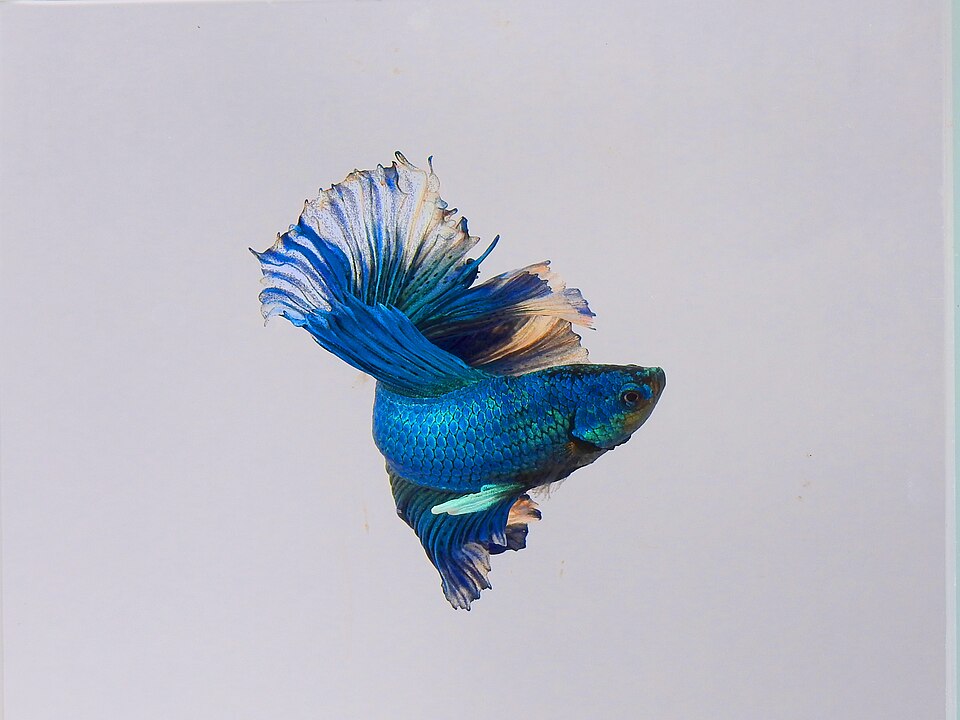
Image: PEAK99, CC BY 3.0 <https://creativecommons.org/licenses/by/3.0>, via Wikimedia Commons · Creative Commons Attribution 3.0 Unported license
Betta splendens and guppies are both colorful tropical fish, but they create very different aquariums. A betta is commonly planned as a solitary centerpiece whose long fins, territorial behavior, and preference for calmer flow shape the tank. Guppies are active social livebearers whose group structure, constant movement, and reproduction must be planned before purchase. Neither is automatically better. The right choice depends on whether the keeper wants one highly visible fish or an active group and whether the aquarium can support the adult behavior rather than the store display.
Betta and guppy requirements at a glance
| Factor | Betta splendens | Guppy |
|---|---|---|
| Social plan | Usually one adult male housed without another male | A planned social group with sex and reproduction considered |
| Activity | Deliberate exploration with regular surface access | Continuous active swimming throughout open areas |
| Water movement | Generally benefits from gentler flow and resting areas | Tolerates moderate community-tank circulation when not excessive |
| Feeding | Protein-focused omnivorous/carnivorous prepared diet | Varied omnivorous diet offered in portions the group can finish |
| Reproduction | Specialized breeding behavior; not a casual community project | Livebearer that can produce repeated broods in mixed-sex groups |
| Main planning risk | Territorial aggression and fin stress | Overpopulation, harassment, and insufficient group planning |
Aquarium size and layout
For either fish, advertised minimum volume is only a starting constraint. A betta aquarium needs stable heated water, filtration that does not push the fish constantly, surface access, a secure lid, cover, and resting areas near the surface. Guppies use more open swimming room and should be budgeted as a group rather than as one small fish. A mixed-sex group also needs capacity for fry or a firm plan to prevent repeated population growth. In both cases, greater usable volume makes temperature and waste less volatile, but layout still matters.
Water parameters and stability
Both species are tropical, yet sharing a temperature label does not make their complete water preferences identical. Bettas are commonly maintained in warm, calm freshwater. Guppies generally perform well in warm water with dependable mineral content and stability. Choose a target inside the documented overlap for the exact stock being kept, then keep it stable. Avoid buying one fish whose preferred conditions sit at the other species’ tolerance edge. Cycling, dechlorination, regular testing, and water changes matter more than repeatedly adjusting pH to chase a number.
Behavior: the largest practical difference
A betta can investigate, flare, chase, or defend space, and individual behavior varies. Guppies are active and visually conspicuous; males may repeatedly display and pursue females, while long-finned strains can attract attention from a territorial fish. This creates risk in both directions: the betta may chase or injure guppies, while persistent guppy activity can keep a betta stressed and prevent calm feeding or rest. Plants and sight breaks help manage ordinary movement, but decoration cannot guarantee peace between incompatible individuals.
Social needs and reproduction
The simplest betta plan is often one adult male without another betta male. Guppies require a group plan. Keeping males and females together can produce frequent fry, and an unprepared keeper may move rapidly from a manageable aquarium to overcrowding. Sex ratios can influence harassment, but separating sexes or choosing an appropriate single-sex group may be more realistic when breeding is not intended. Count the complete guppy group and possible reproduction before comparing tank space with a solitary betta setup.
Feeding and daily observation
Feed both species a complete, appropriately sized diet rather than relying on one generic flake for every need. Bettas may feed deliberately at the surface and can be outcompeted by quick guppies. Guppies spread through the water column and may reach food first. In any shared experiment, the keeper must verify that each animal eats without chronic chasing. Uneaten food should not be added to compensate because it increases waste and can destabilize water quality.
Can a betta live with guppies?
This pairing is risky enough that it should not be treated as a default community recommendation. Long fins, bright colors, rapid movement, territorial responses, and individual variation can produce chasing, torn fins, hiding, missed meals, or chronic stress. A large, well-structured aquarium may reduce some pressure, but it does not remove the behavioral conflict. A keeper attempting the pair needs a cycled separate aquarium ready before introduction—not a divider or spare bowl found after aggression begins.
Do not buy guppies as experimental companions for a betta unless you can house either species separately for the rest of its life. Stop the attempt at persistent chasing, damaged fins, hiding, rapid breathing, loss of appetite, or blocked access to food and resting areas.
Which fish is better for a beginner?
A betta may suit someone who wants to focus on one fish and can provide a heated, filtered, gently flowing aquarium. Guppies may suit someone who wants an active community-style group and is prepared to manage social structure and reproduction. Neither fish excuses cycling or maintenance. Guppies are not easier if uncontrolled breeding overwhelms the tank, and a betta is not easier if it is kept in an unheated bowl. Choose the care routine you can sustain, then build the aquarium around it.
Decision checklist
- Choose a betta if one centerpiece fish and gentle flow fit the intended aquarium.
- Choose guppies if an active group and its social or reproductive management fit the plan.
- Confirm the source water and stable temperature before choosing either species.
- Budget for adult group size, filtration, food, quarantine, and long-term care—not the purchase price.
- Use separate aquariums rather than forcing the species together when behavior is uncertain.
Frequently Asked Questions
Are bettas or guppies easier to keep?
Both can be manageable when properly housed. A betta simplifies the social plan, while guppies introduce group and reproduction decisions. The easier option is the one whose complete needs match the keeper’s aquarium and routine.
Will a betta always attack a guppy?
No individual outcome is guaranteed, but the combination presents meaningful risks from territorial behavior, bright long fins, and constant activity. It should not be assumed safe.
Can guppies live in an unheated tank?
They need a stable temperature appropriate for their stock and should not be treated as a universal room-temperature fish. Measure the aquarium rather than relying on room temperature.
Can a betta live alone?
A properly housed betta can be kept without fish companions. Solitary housing still requires enrichment, stable heated water, filtration, appropriate space, and daily observation.
Sources and references
- Management of Aquarium Fish, Merck Veterinary Manual
- The Ornamental Fish Trade: An Introduction with Perspectives for Responsible Aquarium Fish Ownership, University of Florida IFAS Extension
- Fish: Healthy Pets, Healthy People, Centers for Disease Control and Prevention
Related resources
Continue with the most relevant care guides and supporting aquarium research.
- Betta Species ProfileBetta splendens
- Betta Splendens Care GuideA practical, evidence-informed guide to housing, feeding, behavior, tank mates, health, and long-term care for Betta splendens.
- Guppy Care GuideThe Common Guppy (Poecilia reticulata) is a small, colorful freshwater fish known for its bright colors, active personality, and ease of care. Native to northeastern South America and parts of the Caribbean, guppies are highly adaptable and have become one of the most popular aquarium fish worldwide. They are peaceful, social livebearers that thrive in groups and work well in many community aquariums. Their hardiness and relatively simple care requirements make them an excellent choice for beginner aquarists.
- Guppy Species ProfilePoecilia reticulata