Guppy Care Guide
Guppy Care Guide
Download Care Guide PDFPoecilia reticulata
The Common Guppy (Poecilia reticulata) is a small, colorful freshwater fish known for its bright colors, active personality, and ease of care. Native to northeastern South America and parts of the Caribbean, guppies are highly adaptable and have become one of the most popular aquarium fish worldwide. They are peaceful, social livebearers that thrive in groups and work well in many community aquariums. Their hardiness and relatively simple care requirements make them an excellent choice for beginner aquarists.
By GuideMyTank Editorial Team · Published · Updated
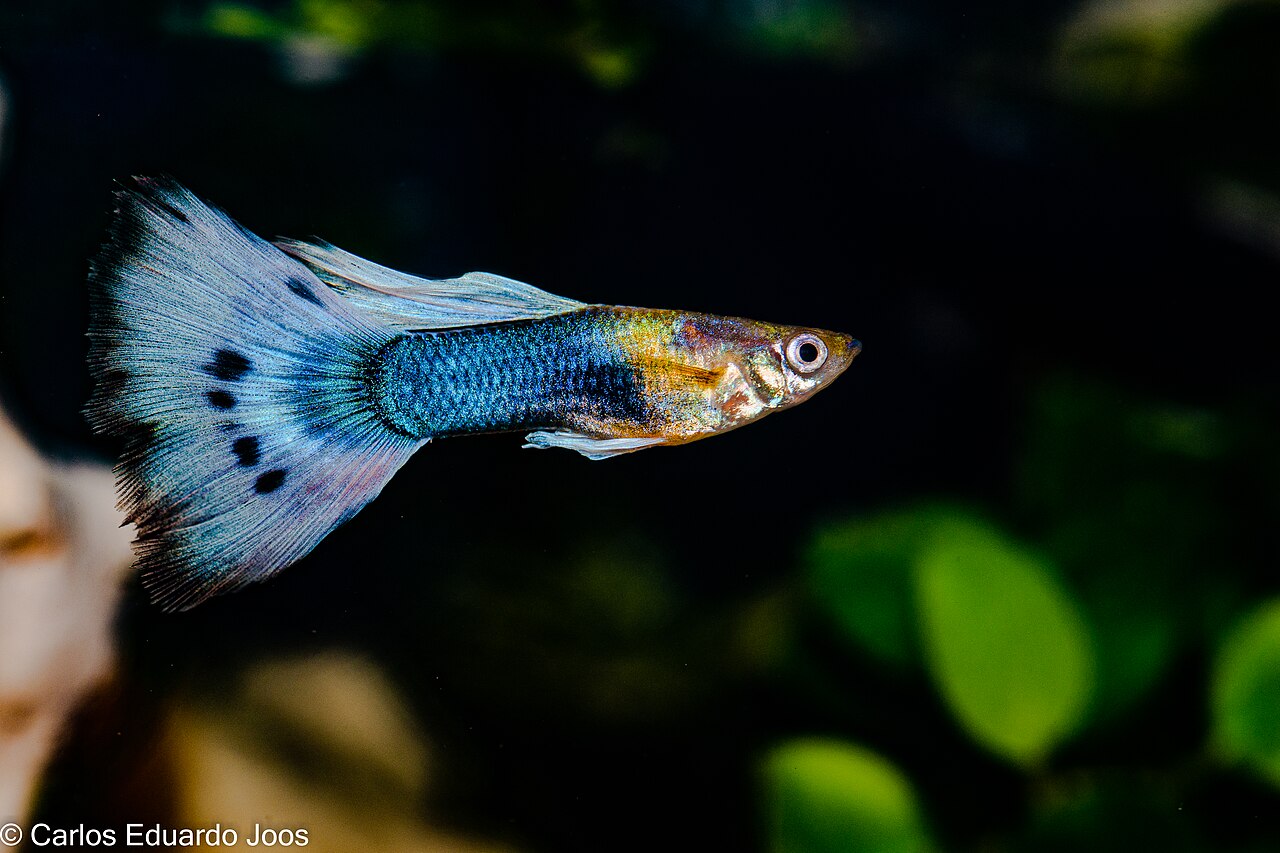
Image: By Carlos Eduardo Joos - The guppy, CC BY 2.0, https://commons.wikimedia.org/w/index.php?curid=137042462
Understanding the species
Overview
The Common Guppy (Poecilia reticulata) is a small, active livebearer prized for its wide variety of colors, patterns, and tail shapes. Guppies are social, adaptable fish that spend most of their time swimming throughout the middle and upper levels of the aquarium. They are generally easy to care for and reproduce readily, making them popular with both beginner and experienced aquarists. Selective breeding has produced numerous varieties that differ significantly in appearance while sharing similar basic care requirements.
Natural habitat
Common Guppies (Poecilia reticulata) are native to northeastern South America and parts of the Caribbean, where they inhabit streams, pools, ponds, and other shallow freshwater habitats. They are highly adaptable and can be found in both slow-moving and moderately flowing waters. Their natural habitats often contain dense aquatic vegetation, submerged roots, rocks, and leaf litter, which provide cover from predators and support the small insects, algae, and other foods guppies feed on. Habitat Tip: Recreate these conditions with live plants, areas of open swimming space, and gentle to moderate water movement. Floating plants can also provide useful cover near the surface, where guppies frequently spend their time.
Adult size and lifespan
Adult Common Guppies typically reach 1.5–2.5 inches (4–6.3 cm). Females are generally larger and fuller-bodied, while males tend to be smaller with more elaborate colors and fins. Guppies usually live around 2–3 years, although excellent care and stable water conditions can help some individuals live longer.
Aquarium setup and water conditions
Aquarium requirements
Common Guppies do best in a 10-gallon tank or larger, with additional space recommended for groups or mixed-sex populations. Provide plenty of open swimming room along with live plants and hiding areas for cover. Good filtration and regular maintenance are important, as guppies can produce significant waste when kept in larger groups.
Water parameters
Common Guppies are adaptable but prefer warm, moderately hard to hard water with stable conditions. Temperature: 72–82°F (22–28°C) pH: 7.0–8.0 GH: 8–20 dGH KH: 4–12 dKH Ammonia: 0 ppm Nitrite: 0 ppm Nitrate: Below 20 ppm Water Tip: Guppies generally prefer mineral-rich water. Avoid keeping them long-term in very soft, acidic water, and prioritize stability over chasing exact numbers.
Filtration and flow
Common Guppies prefer clean, well-oxygenated water with gentle to moderate flow. Sponge, hang-on-back, and canister filters can all work well when appropriately sized for the aquarium. Avoid excessively strong currents that force guppies to constantly struggle while swimming, especially varieties with large or flowing fins. Flow Tip: Aim for steady circulation while providing calmer areas where guppies can rest comfortably.
Heating requirements
Common Guppies prefer temperatures between 72–82°F (22–28°C). In most aquariums, an adjustable heater is recommended to maintain a stable temperature and prevent sudden fluctuations.
Lighting
Common Guppies do well with moderate aquarium lighting and do not require specialized lights. A consistent 8–10 hour light cycle works well, especially in planted aquariums. Live plants and floating vegetation can provide shaded areas where guppies can retreat from brighter lighting. Lighting Tip: Use a timer to maintain a consistent day and night cycle while helping prevent excessive algae growth.
Substrate
Common Guppies have no strict substrate requirements and can be kept over sand, gravel, or planted aquarium substrates. Choose a substrate that works well with the plants and overall aquarium setup.
Plants and decor
Common Guppies thrive in planted aquariums with a mix of live plants, floating vegetation, and open swimming space. Plants provide cover, reduce stress, and give fry places to hide from adult fish. Good choices include Java fern, Anubias, Java moss, hornwort, and floating plants.
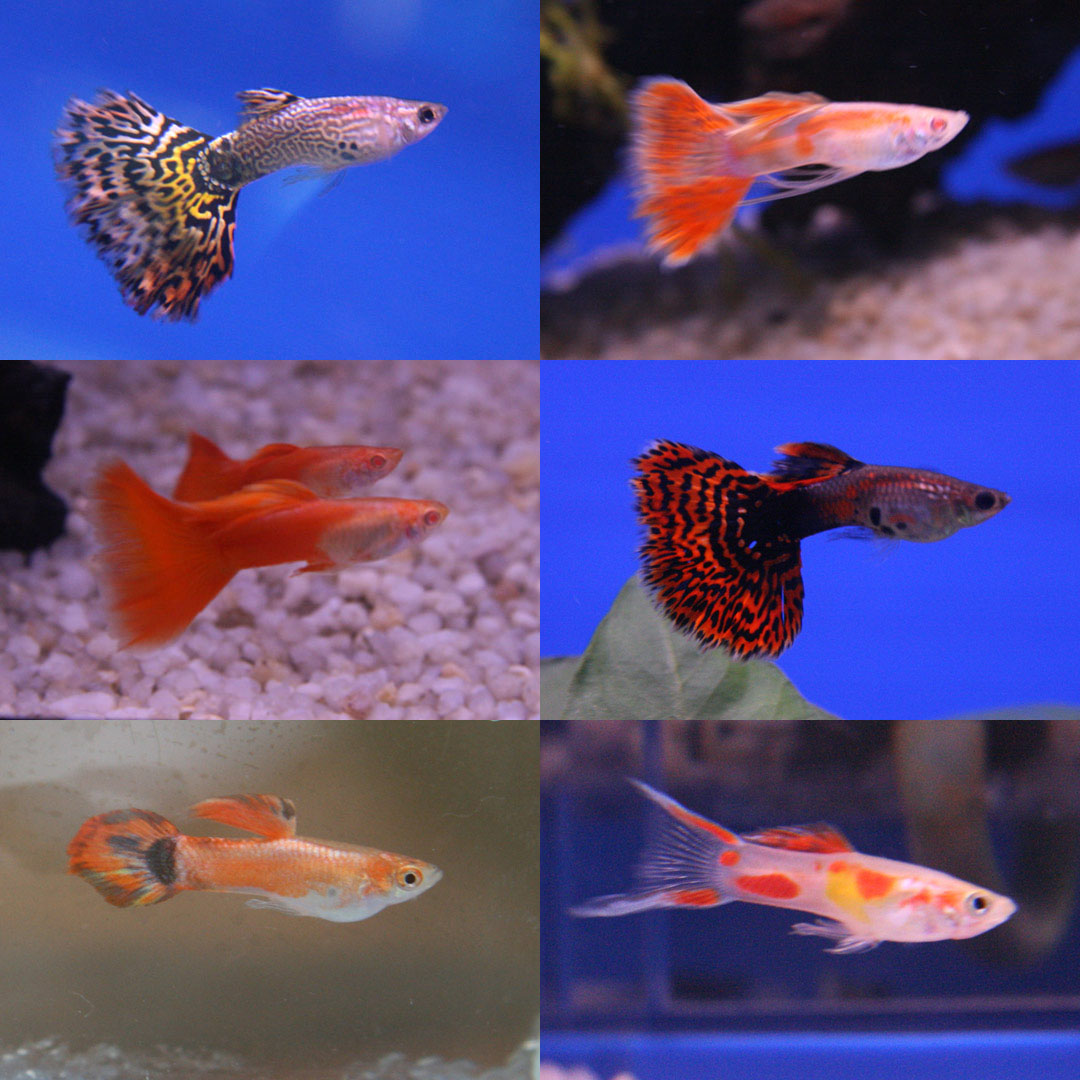
Image: By Melanochromis - Self made. Own work by uploader, Public Domain, https://commons.wikimedia.org/w/index.php?curid=6193322
Behavior and community planning
Behavior and temperament
Common Guppies are peaceful, active, and social fish that spend much of their time exploring the middle and upper areas of the aquarium. Males frequently display their fins and chase females, while minor chasing between guppies is also common. Guppies often become comfortable with their keepers and may swim toward the front of the tank or gather near the surface when approached, especially when they associate people with feeding. This curious behavior can make them engaging fish to observe and interact with.
Social and schooling requirements
Common Guppies are social fish but are not true schooling fish. They should generally be kept in groups, where they remain active and regularly interact with one another. For mixed-sex groups, aim for around 2–3 females for every male to reduce persistent attention and stress on individual females. All-male groups are also possible, though some chasing and displaying should be expected.
Tank mates
Common Guppies are peaceful community fish that do best with similarly sized, non-aggressive species that share their preference for moderately hard, warm water. Good tank mates include Corydoras, Platies, Mollies, Swordtails, peaceful Rasboras, small Tetras, Otocinclus, and peaceful snails or shrimp. Avoid species likely to nip their colorful fins or bully them.
Species to avoid
Avoid keeping Common Guppies with large, aggressive, predatory, or persistent fin-nipping fish. Their bright colors and flowing fins can make them easy targets for aggressive tank mates. Species to avoid include: Bettas, especially aggressive individuals Tiger Barbs and other persistent fin nippers Large or aggressive Cichlids Oscars Jack Dempseys Pufferfish Large predatory Catfish Aggressive or territorial Gouramis Compatibility Tip: Watch for fin damage, persistent chasing, hiding, or difficulty feeding, as these can indicate that a tank mate is stressing or bullying your guppies.
Feeding, health, and routine care
Diet and feeding
Common Guppies are omnivores and benefit from a varied diet. A quality tropical flake or small pellet can serve as their staple food, supplemented with brine shrimp, daphnia, bloodworms, and other small frozen or live foods. Feed small portions 1–2 times per day, offering only what they can consume within a few minutes. Feeding Tip: Rotate different foods throughout the week to provide balanced nutrition and help support healthy growth, coloration, and activity.
Common health concerns
Common Guppies are generally hardy but can be affected by fin rot, ich, fungal infections, parasites, and swim bladder problems. Poor water quality, overcrowding, stress, and unstable temperatures can increase their risk of illness. Watch for signs such as clamped fins, white spots, damaged fins, unusual swimming, loss of appetite, or prolonged hiding.
Breeding and long-term guidance
Beginner guidance
Common Guppies are an excellent choice for beginners because they are hardy, adaptable, active, and relatively easy to care for. They do best in a fully cycled aquarium with stable water conditions, appropriate tank mates, and a varied diet. Their rapid reproduction is often the biggest challenge for new keepers, so consider an all-male group if you do not want fry. Beginner Tip: Start with a small group and avoid overcrowding. Guppy populations can increase surprisingly quickly when males and females are kept together.
Species-specific guidance
Population and fry planning
Common Guppies are livebearers and breed readily in home aquariums. Instead of laying eggs, females give birth to fully formed, free-swimming fry, typically after a gestation period of around 3–4 weeks. Females can store sperm and produce multiple broods after a single mating. Adults may also eat newborn fry, so dense plants or a separate nursery tank can improve survival rates. Breeding Tip: Guppy populations can grow very quickly. Have a plan for housing or rehoming fry before keeping males and females together.
Frequently asked questions
Are guppies good for beginners?
Yes. Guppies are hardy, adaptable, and easy to care for, making them a great choice for new aquarium keepers.
How many guppies should be kept together?
Keep at least 3–5 guppies. For mixed-sex groups, aim for 2–3 females per male to reduce stress from persistent mating behavior.
How often do guppies have babies?
Female guppies can produce a brood roughly every 3–4 weeks and may store sperm, allowing them to produce multiple broods after mating.
Sources and references
- Are Guppies Really Beginner Fish?, Practical Fishkeeping
- Guppy Care Guide: Lifespan, Size, Diet, Breeding & More — Millie Sheppard, Aquarium Source
Related resources
Continue researching Guppy care and aquarium planning.
- A Practical Quarantine Routine for New Freshwater FishHow to prepare and operate a simple quarantine aquarium, observe new fish, prevent cross-contamination, and decide when an animal is ready for the display tank.
- Betta vs Guppy: Care, Tank Setup, and Compatibility ComparedA detailed comparison of Betta splendens and guppies covering adult size, social structure, water overlap, aquarium setup, feeding, reproduction, behavior, and the risks of keeping them together.
- Endler's LivebearerPoecilia wingei
- Guppy Species ProfilePoecilia reticulata